
Watching water pour over your gutters in a Melbourne downpour can make you wonder whether to grab a ladder or grab your phone. The problem looks simple from the ground, just a leak or a sag, and it is tempting to think a quick Saturday fix will solve it. At the same time, you probably know that anything involving a roof, a ladder, and Florida storms can get expensive if it goes wrong.
We talk to a lot of Melbourne homeowners who feel stuck between saving money with DIY gutter repair and worrying about creating a bigger problem. Some jobs really are straightforward, like clearing a one-story gutter run packed with leaves. Others only look simple until the next storm drives water behind the gutter and into fascia or soffits. Knowing which is which is the part most online advice glosses over.
Since 2008, our team at Hippo Roofing LLC has completed more than 10,000 roofing projects across Central and Eastern Florida, including Brevard County communities like Melbourne. We see every week which DIY fixes hold up in our climate and which ones fail as soon as the weather tests them. In this guide, we will share how we sort gutter problems into safe DIY repairs and situations where calling a roofing contractor is usually the smarter move.
How Melbourne Weather Pushes Your Gutters To Their Limits
Melbourne does not treat gutters gently. Afternoon thunderstorms can dump a lot of water in a short time, and tropical systems bring long periods of wind and rain that hit homes from different angles. Your gutters are not just dealing with gentle showers, they are handling sudden surges of water rolling off the roof along with leaves, roof granules, and debris stirred up by wind.
In ideal shape, gutters along your roof edge collect this runoff and carry it to downspouts, which move water away from the foundation and landscaping. A slight, consistent slope keeps water moving instead of pooling in the middle. In a Melbourne storm, a correctly sloped, clear gutter can channel heavy flow without spilling over the front, backing up at corners, or letting water run behind the metal where you cannot see it.
Problems start when that slope is off, fasteners loosen, or debris builds up. Standing water from frequent storms stresses joints and sealant, which can open seams on sectional gutters. Wind-driven rain can push water sideways, so any gap between the gutter and fascia, or between the fascia and drip edge, becomes a pathway for moisture. In our work, we see this lead to peeling paint, fascia rot, stained soffits, and erosion under downspouts around Melbourne homes.
After years of working in Florida’s demanding climate, our crews have watched the same patterns repeat. Homes with solidly attached, properly pitched gutters and clear downspouts ride out heavy rain with much less trouble. Homes with “good enough” DIY patches, especially at corners or long runs, often call us again after storms drive water into the roof edge. That local experience shapes how we recommend you approach DIY gutter repair in Melbourne.
What DIY Gutter Repairs Homeowners Can Safely Tackle
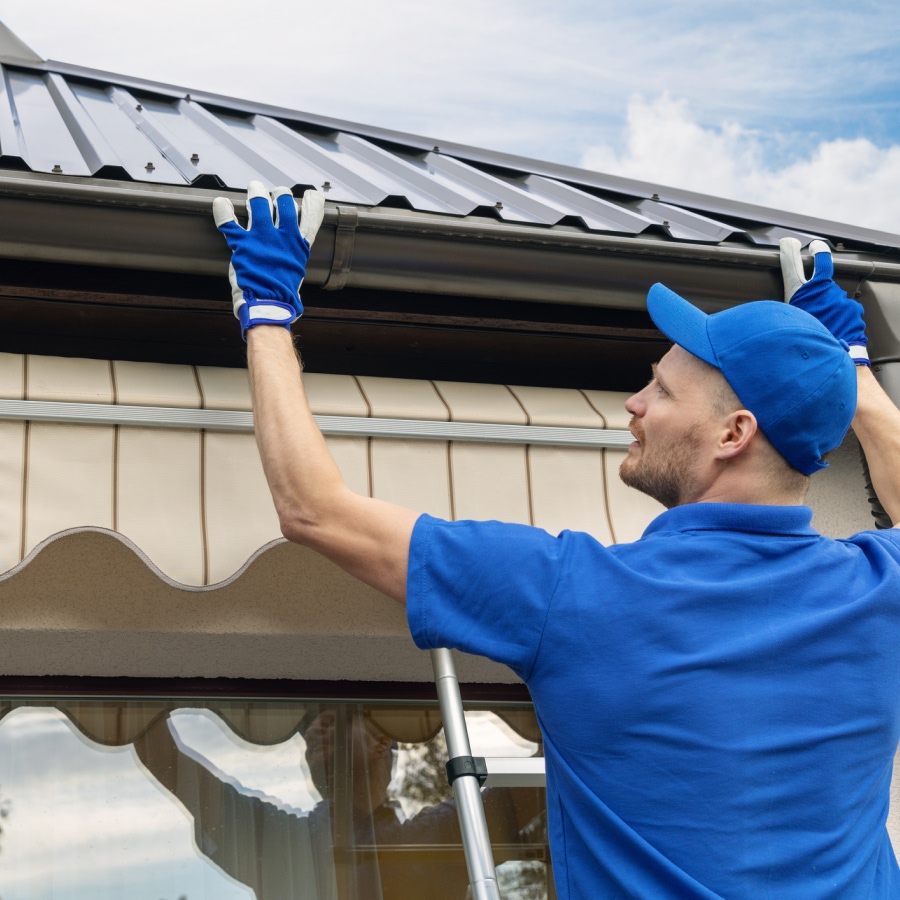
Some gutter issues on Melbourne homes can be handled safely by homeowners, especially when the system is in otherwise good condition and the work stays within easy reach. For one-story houses with stable ground and clear access, light gutter maintenance can be a practical weekend task. The most important part of any DIY project is understanding where simple upkeep ends and where safety risks or hidden damage begin. Knowing that boundary before climbing a ladder helps prevent small problems from turning into injuries or costly mistakes.
Tasks that are typically reasonable for DIY gutter care include:
- Removing leaves and surface debris: Clearing out pine needles, twigs, and buildup from open, reachable sections of the gutter
- Flushing downspouts with water: Using a hose to push through light clogs caused by dirt or leaf fragments
- Resealing minor seam leaks: Applying gutter sealant to a small joint where the metal is intact and dry
- Tightening or replacing a loose fastener: Securing a single screw or hanger on a straight, one-story run
- Checking gutter slope visually: Making sure water appears to flow toward downspouts without pooling
- Cleaning outlet openings: Removing debris at the top of downspouts where blockages often begin
- Inspecting from the ladder: Looking for obvious cracks, holes, or separated joints without reaching or overextending
- Washing the exterior surface: Rinsing dirt and algae that can trap moisture against the metal
- Clearing roof edge debris: Removing leaves sitting just above the gutter that may wash in during the next rain
- Monitoring after rainfall: Watching for drips or overflow to confirm the fix worked
Before starting any of these tasks, it helps to evaluate the condition of the structure supporting the gutter. From the ground, the fascia should appear solid and relatively straight, without sagging sections, soft spots, or deep staining. The gutter itself should sit close to the wood, not pulled away or bowed along the run. If problems are limited to a small leak, loose fastener, or debris buildup, DIY maintenance can be a sensible solution. However, when gutters are sagging, fascia looks damaged, or multiple sections are failing, those are signs that professional repair is the safer and more effective next step.
Simple DIY Fixes That Usually Make Sense
Cleaning is the most common task homeowners handle themselves. On a dry day, using a stable ladder on firm, flat ground, you can scoop out leaves, twigs, and roof granules from a one-story gutter and then run a garden hose to confirm water flows toward downspouts. Many Melbourne roofs shed a lot of granules after strong sun and storms, so clearing these regularly helps prevent clogs at elbows and outlets.
Spot resealing a seam can also be manageable. If you see a small drip directly under a visible joint on a one-story section, and the metal around it looks intact and rust free, you can carefully remove old, failing sealant and apply a new bead of a sealant recommended for outdoor metal use. After it cures, test the area with a hose. If water still leaks in that same spot, that usually points to a deeper alignment or slope problem that needs a closer look.
Ladder Safety In Florida Yard Conditions
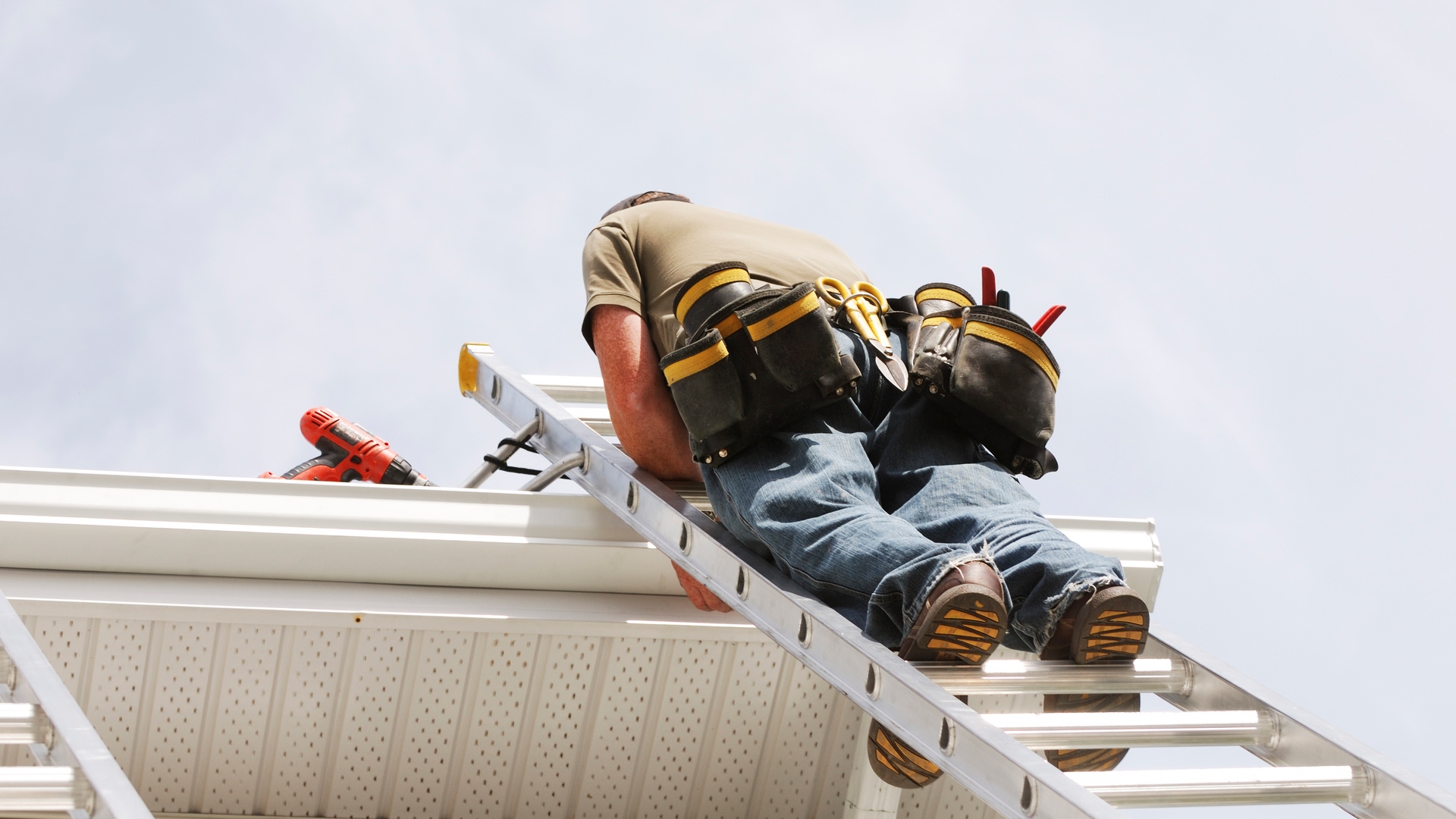
Even simple DIY work becomes risky if ladder placement is poor. Many Melbourne yards include soft soil, mulch beds, or decorative rock around the foundation, and these surfaces can shift under ladder feet. Before climbing, place the ladder on the firmest ground you can find, test for movement, and keep the angle conservative enough that you do not feel like you are leaning forward to stay balanced.
Roof surfaces add another layer of risk. In our humid climate, shingles often grow a thin film of algae, especially on shaded sides of the house. That surface can be slick even when it looks dry. We see too many falls linked to homeowners stepping from a ladder onto a sloped roof to reach a tough spot. If your gutters require you to move off the ladder onto the roof, or if they are on a two-story section, it is safer to bring in a crew that works at height every day.
Gutter Problems That Usually Mean You Should Call A Pro
Some gutter problems look minor at first glance and can easily give homeowners a false sense of confidence. A slight dip, a small gap, or faint staining along the eaves may seem like cosmetic issues, but in many cases they point to deeper trouble at the roof edge. Throughout Central and Eastern Florida, we often find that these symptoms are connected to hidden moisture damage or failing structural support, making them poor candidates for do-it-yourself fixes. Recognizing when a gutter issue has crossed that line can save time, money, and potential injury.
Situations that typically call for professional evaluation and repair include:
- Extended sagging between hangers: Long sections drooping in the middle often mean the fascia behind the gutter has weakened
- Multiple attachment points pulling loose: Gutters separating from the roofline in several spots usually indicate compromised wood, not just failed fasteners
- Soft or decayed fascia boards: Wood that dents, crumbles, or feels spongy behind the gutter suggests prolonged water exposure
- Persistent leaks in the same location: Repeated dripping after sealing attempts often means water is entering from behind or above the gutter
- Visible staining or flaking paint: Dark streaks, peeling paint, or bubbling finishes can signal moisture trapped under the gutter system
- Swollen or warped trim: Changes in the shape of fascia or soffit boards point to water infiltration over time
- Separated seams along long runs: Joint failures across multiple sections may reflect improper pitch or structural movement
- Rust or corrosion at hanger points: Deterioration where gutters attach can weaken the entire run
- Overflow during moderate rain: Water spilling over despite clean gutters often means the system is misaligned or undersized
- Signs of roof edge damage: Shingle wear or rot near the gutter line suggests the issue extends beyond the gutter itself
Safety is another major factor in deciding when to call a professional. Gutters on two-story homes, sections above steep roof slopes, or areas close to power lines introduce risks that go far beyond the repair itself. Professional crews have the ladders, fall protection, and experience to work safely at height while also inspecting what is hidden behind the gutter. Just as importantly, they can address the underlying cause, not just the visible symptom, helping prevent repeat failures and more extensive damage down the line.
Hidden Damage At The Roof Edge
From the ground, you see the metal of the gutter and maybe the front edge of the fascia board. Behind that, several components work together to keep water out of your home. The gutter should attach to solid fascia or rafter tails, a drip edge should guide water off the roof into the gutter, and underlayment should protect the roof deck. When water repeatedly overflows or sneaks behind the gutter, those layers can slowly break down.
We often find that sagging gutters are not just held by loose screws. The fasteners have pulled out because the wood they were anchored into has softened or rotted. Simply driving longer screws into that same compromised wood, a common DIY move, may hold through a light shower but can fail quickly in a strong wind or heavy storm. Because we are a Florida Certified Roofing Contractor, our teams receive training to pull back components as needed, evaluate the condition of fascia and roof edges, and recommend repairs that address the whole system, not just the visible symptom.
Cost, Risk, and Results: Weighing DIY Versus Professional Repair
Most homeowners in Melbourne are trying to balance three things: money, safety, and how well the fix will hold up in real weather. DIY gutter repair can look like the cheapest route because you are not paying for labor, only for sealant, fasteners, and maybe a new ladder or tools. The tradeoff is your time, your physical safety, and the possibility of doing the same job twice if the first attempt does not work.
On the other side, professional repair includes the visit, the inspection, and the labor it takes to assess and correct the issue. You are paying for more than someone climbing a ladder. You are paying for practice spotting subtle problems, the right materials for Florida conditions, and the ability to adjust slope, reattach to solid structure, and deal with related roof edge issues in one visit. For smaller jobs, that can feel like a lot, but for anything near the line between cosmetic and structural, it often costs less than recovering from a failed DIY.
Risk is where the decision becomes clearer. A misstep on a ladder can lead to medical bills that dwarf the cost of a professional repair. An incorrect slope that looks fine in a light test with a garden hose can cause water to pool and spill under the drip edge during the next tropical system. That kind of hidden water movement is what leads to stained ceilings, warped trim, and mold concerns down the road. In our work, we see many cases where a small upfront investment in careful repair would have reduced the chance of much larger interior and exterior damages.
Results depend heavily on materials and installation methods. We rely on dependable products from established manufacturers that are selected for Florida heat, UV exposure, and moisture. Sealants, hangers, and fasteners that perform well in a cooler, drier climate can break down faster on Melbourne homes. By using hardware suited to these conditions and tying gutters back into solid structure, we aim for repairs that stay put when the next storm line moves through.
How Gutter Issues Can Affect Your Roof and Insurance Situation
Many homeowners think of gutters as separate from the roof, more of a trim detail than a core part of the system. In practice, we often see the roof edge pay the price for gutter problems. Overflow that pours over the front of the gutter, or water that runs behind it, keeps fascia and soffits wet for far longer than they were meant to be, especially during long rain events from offshore systems.
As fascia softens, fasteners lose their grip, which lets the gutter pull away further and exposes more of the roof edge to direct water. Over time, moisture can work its way under the drip edge and into the ends of roof decking or rafters. Inside the home, this may show up as subtle staining at the top of walls near eaves, musty smells in certain rooms, or bubbling paint on soffits. These are not problems a bead of sealant or an extra screw will fix.
Insurance adds another layer. While every policy and situation is different, adjusters looking at roof damage after a storm usually pay attention to prior condition and workmanship. Obvious DIY patches at the roof edge, gutters hanging from improvised brackets, or signs that water has been leaking for a long time can complicate those conversations. Our role is to focus on roofing and gutter conditions. We help document what we find at the roof line and support homeowners through the roofing portion of the claims process so they have clear information to work with.
By addressing gutter issues correctly and early, you reduce the chance that a future roof inspection raises questions about longstanding water problems at the eaves. A professional assessment now often means fewer surprises when you or your insurer take a closer look at the roof after a major weather event.
A Simple Checklist To Decide: Fix It Yourself or Call Us
At this point, you might be looking at your own gutters in Melbourne and trying to match them to the scenarios we have described. To make that easier, it helps to boil everything down to a few clear questions you can answer from the ground or with a quick, safe look on a one-story section. This is not a substitute for an inspection, but it is a practical starting point.
If you see light debris buildup, a single small drip at a clearly visible seam on a one-story run, solid looking fascia, and you can reach the area from stable ground without leaning or stepping onto the roof, DIY is usually a fair option. Take photos first, work in dry conditions, and test your work with a hose. If the leak stops and everything still looks solid, you have likely handled a basic maintenance task correctly.
If you see long sags, multiple loose sections, staining or soft wood along fascia or soffits, or any signs of water inside the home near eaves, that points strongly toward a professional repair. The same goes for anything on a two-story section, above steep roof pitches, or near electrical service lines. In those cases, the combination of safety risk and potential hidden damage makes a call to a roofing contractor the wiser choice.
Our team at Hippo Roofing LLC is veteran owned and focused on steady, respectful service for our neighbors across Central and Eastern Florida. We show up, look carefully at how your roof and gutters are working together, and explain what we find in plain language so you can decide your next step with confidence. If your checklist answers are raising concerns, you do not have to sort them out alone.
Need A Second Set Of Eyes On Your Gutters In Melbourne?
DIY gutter repair has its place, especially for simple cleaning and small fixes on safe, accessible sections. The real challenge is spotting where a small nuisance is actually a warning sign that your roof edge, fascia, or soffits are already under stress from Florida weather. Matching the right approach to the right problem is what keeps minor issues from turning into major repairs later.
If your gutters in Melbourne show sagging, pulling away, staining, or other red flags, or if you simply want a trained roofing contractor to confirm what you are seeing, we are ready to help. We bring local experience, reliable materials, and a clear communication style so you know exactly what your options look like before any work begins.
Call (321) 325-3339 to schedule a roof and gutter assessment for your Melbourne home.